



A lawyer who exposed his government's corruption died in a prison in the Russian Arctic. His case shows how corrupt power clings to public money at the cost of the life and liberty of those who expose it. It would be naive to think persecuting dissent happens only elsewhere: in democracies like ours it takes quieter, yet effective, forms.
An opponent against the State
Alexei Navalny was a lawyer and anti-corruption campaigner in Russia, a critic who defended something as basic as the rule that laws must be obeyed in a country that calls itself democratic. His story, even told in a documentary film, travelled around the world. In February 2024 he died in State custody, in a penal colony. The United Nations human rights office said it was appalled and recalled an essential principle: when a person dies in custody, the State is presumed responsible unless an impartial and independent investigation proves otherwise.
What matters about his case is not only the personal tragedy, but what it reveals: corrupt governments strive to control power and, ultimately, public money, with no regard for a citizen's life, liberty or rights.
What Strasbourg said
Long before his death, the Grand Chamber of the European Court of Human Rights had already examined his case. In its judgment of 15 November 2018 it found violations of the right to liberty (Article 5), the right to a fair trial (Article 6) and freedom of assembly (Article 11) arising from seven arrests made between 2012 and 2014. Most importantly, it found a breach of Article 18 of the Convention: at least two of those arrests were in fact aimed at suppressing political pluralism.
That is the key point. The law was being used not to protect, but as an instrument of repression with a veneer of legality.
The quieter forms of persecution
The way corrupt governments treat their opponents varies from country to country. We can all think of places where murder, prison or enforced disappearance are the tools of choice. And in Spain? Here the methods are less visible, but citizens who report corruption describe recognisable patterns:
- Judicial coercion: disproportionate criminal complaints and lawsuits against whistleblowers, with sums designed to intimidate.
- Procedural attrition: years of proceedings, cases shelved without investigation and costs orders that exhaust both resources and resolve.
- Media silence: a press often dependent on institutional advertising, which avoids exposing the dirty laundry of economic and political elites.
- Administrative opacity: public information refused or hidden behind legal exceptions.
Our own mirror
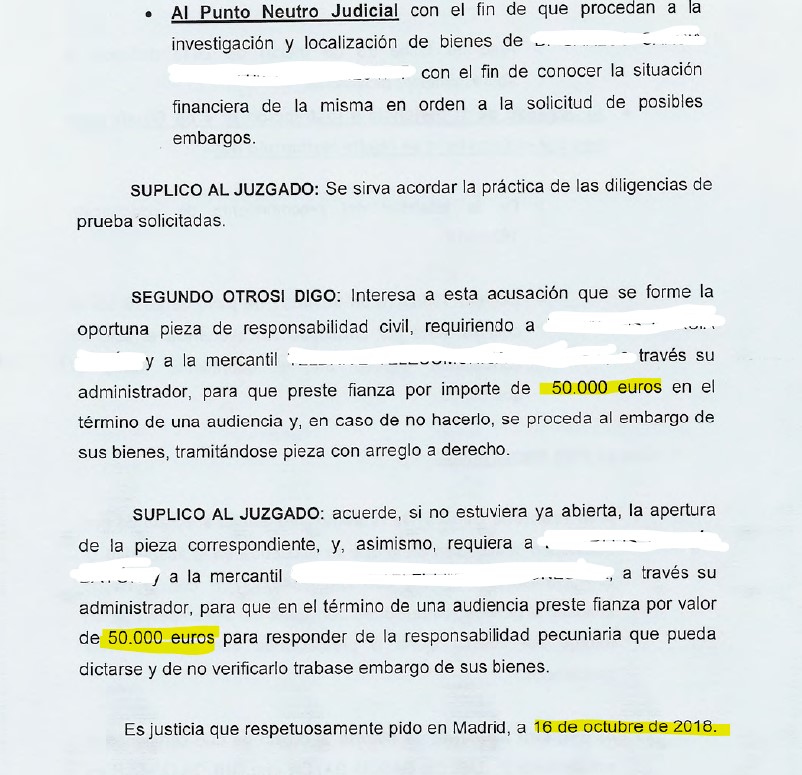
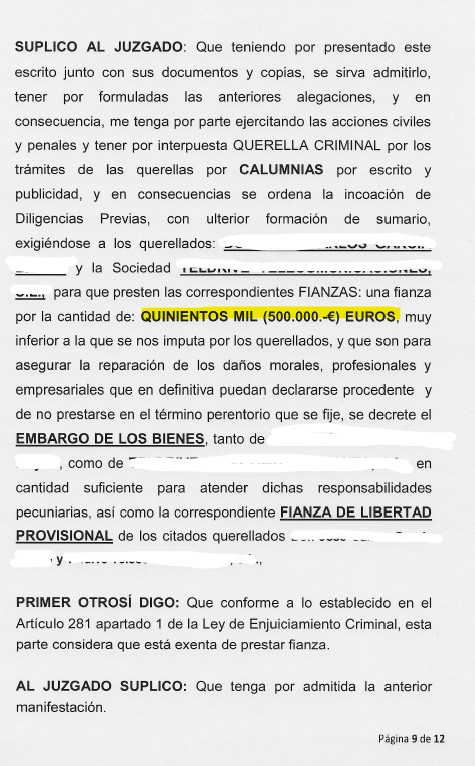
Our ten-year judicial journey illustrates, in our view, how a network of interests operates in which judges, prosecutors and public institutions appear to close ranks to cover up alleged corrupt conduct. When a citizen defends the truth with the Constitution in hand, what he receives from the institutions is not protection, but extortion, coercion and intimidation. The documents we reproduce are a sample of this.
Corruption is not confined to one branch of the State: a legislature that fails to protect whistleblowers effectively, an executive that conceals and a judiciary that does not investigate are all parts of the same machinery.
No democracy is immune to the persecution of dissent; only the method changes, and the silence of others is always its best ally.
Refusing to look away
The systematic violation of citizens' constitutional rights will undoubtedly fill a long chapter of our recent history. Writing a different ending is up to us:
- Support those who report corruption, without waiting until they become visible victims.
- Demand independence and rigour from the press, and back the outlets that earn them.
- Join civic associations that keep watch over all three branches of the State.
The memory of those who paid with their lives for defending the law obliges us never to give up.