




For European citizens who have lost everything in their national courts, Strasbourg is the last door. But what happens when that door always closes in the same way, with the same formula and at the hand of the same judge? Three applications, three unreasoned rejections and one uncomfortable question: who guarantees the impartiality of the guardian of human rights?
The last chance for justice
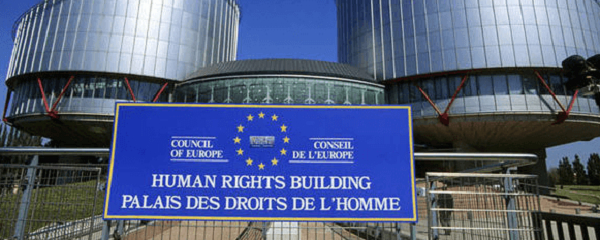
For citizens of the Council of Europe's member States, the European Court of Human Rights (ECHR) is the last chance to obtain justice when national courts have failed. A favourable judgment in Strasbourg places national justice in an awkward position, because it declares before the whole of Europe that a State has violated fundamental rights. In Spain, moreover, a judgment against the State can open the way to an application for review before the Supreme Court.
The European Convention on Human Rights itself enshrines, in Article 6, the right to a fair hearing by an independent and impartial tribunal. It is only reasonable to expect the court charged with protecting that right to be the first to respect it.
Three attempts, one judge
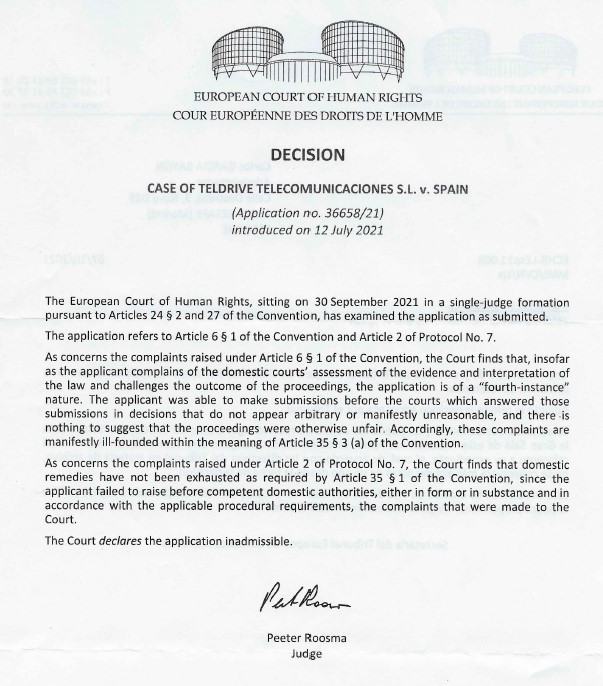
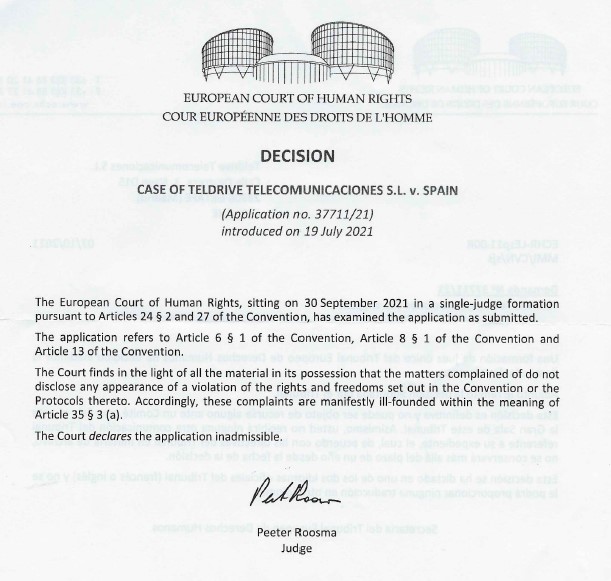
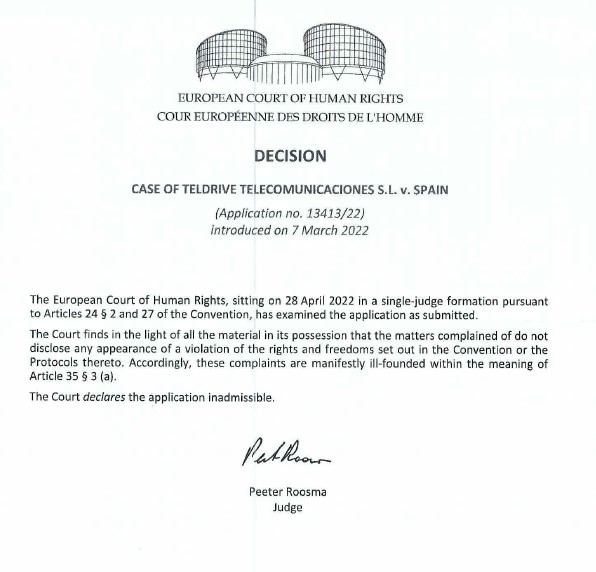
Our experience has been baffling. We have applied to the ECHR on three occasions and, paradoxically, all three applications fell to the same single-judge formation, embodied by the same person. All three ended the same way: declared inadmissible by a standardised decision, with no reasoning that would allow us to understand why.
Article 27 of the Convention allows a single judge to declare an application inadmissible or strike it out where this can be done without further examination, and that decision is final. The mechanism was designed to ease the Court's enormous workload. Yet when it is combined with a lack of reasoning and the repeated involvement of the same judge, the outcome is hard to reconcile with the appearance of impartiality that the Court itself demands of States.
Formalism as a barrier
This lack of reasoning is compounded by a formalism at odds with twenty-first-century reality. In one of our cases, the application was returned because the applicant's signature, which had to be submitted on paper, was a copy rather than an original. The Rules of Court require original signatures on the application form and on the representative's authority. In a Europe where electronic signatures are commonplace across administrations and courts, it is striking that access to the final safeguard of human rights still depends on the post and on ink.
- Inadmissibility decisions without individual reasoning.
- Repeated assignment of the same single judge to applications from the same applicant.
- Formal requirements that penalise citizens without resources or specialist advice.
What European institutions have seen
Not everything is discouraging. European institutions have at times shown that they can see what national judges do not. One example: the European Commission concluded that aid granted to digitise and extend the terrestrial television network in remote areas of Spain breached EU State aid rules, and confirmed that it had to be recovered from certain private operators. Economic advantages that, surprisingly, had drawn no reproach from the Spanish courts.
A human rights court that does not explain its decisions asks citizens for a faith that justice should never need.
Reforms that are needed
We support the Convention system, and that is precisely why we call for it to be strengthened:
- Brief but individualised reasoning for every inadmissibility decision.
- Random and verifiable allocation of applications, so that the same single judge does not systematically decide the cases of the same applicant.
- Fully electronic filing of applications with recognised digital signatures.
Strasbourg's credibility belongs to all Europeans. Demanding that it be exemplary is not an attack on it, but a way of protecting it. If you have had a similar experience, share it: only organised civic pressure will ensure that the last instance is also the fairest.