
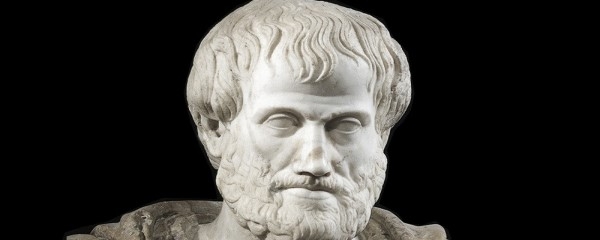
More than two thousand years ago, Aristotle warned of the danger of a power that is neither bound by law nor accountable. Spain, whose Constitution proclaims everyone equal, nonetheless keeps an army of privileged figures who do not answer to justice like everyone else. Holding power to account is the best vaccine against its corruption.
The Constitution as a limit on power
The 1978 Constitution is the centre of our political system and of the entire legal order. Its purpose is twofold: to organise power and, above all, to limit it. Individual rights and constitutional guarantees form the core of a constitutional State; they are a sphere of freedom the State may not enter and, at the same time, a shield against abuse by those who run it.
That is the very purpose of our association: to denounce and expose violations and misuse of the supreme law. And of all of them, the most serious is the set of privileges that the country's most powerful citizens have reserved for themselves for decades.
Power as leadership, not domination
Political power is an essential element of the State, a human creation designed for the common good. We should not equate it with wickedness, exploitation or mere domination. Properly understood, power is leadership: those who exercise the authority of the State have a duty to guide society towards cohesion, balance and the common good.
But power without oversight or accountability —which is exactly what aforamientos confer— inevitably degenerates. Classical political philosophy had already identified its main pathologies:
- Bad government: the private interest of those in charge replaces the common good.
- Excess and abuse of power: authoritarianism, despotism or tyranny, resulting in restricted freedoms and rights violated for the benefit of a few.
- Autocracy: power accepts no control whatsoever and places itself above all accountability.
- Authoritarianism: power tolerates civil society only as long as it does not threaten its position.
Power that is not accountable is not authority: it is privilege, and privilege is the antechamber of corruption.
Aforamientos, an anomaly across all three powers
In Spain, the system of aforamientos extends to office-holders in all three branches of the State: members of the legislature, members of the Government and senior executive officials, and judges and prosecutors in the judiciary. By various estimates, the number of aforados in our country is around 240,000 if bodies with special jurisdiction are included, a figure unmatched among comparable democracies.
Its official justification is to protect the independence of institutions. Its practical effect, however, is to create a category of citizens who are not tried by the same judge as everyone else, in open tension with Section 14 of the Constitution, which proclaims all Spaniards equal before the law without discrimination on grounds of any «personal or social condition or circumstance».
The big unanswered questions
After years of complaints, we are still waiting for answers to three simple questions:
- Why is a system of aforamientos that clashes with Section 14 of the Constitution being maintained?
- Why has none of the roughly 5,400 judges and magistrates Spain had in 2022 referred the question of unconstitutionality that Section 35.1 of the Organic Law of the Constitutional Court obliges them to raise when they doubt the constitutionality of an applicable law?
- Why does almost no one, apart from civic associations like ours, openly call for their abolition and the full restoration of equality before the law?
It is paradoxical that the warnings of classical Greece, a society divided between free people and slaves, citizens and non-citizens, should still apply to twenty-first-century Spain. Were we not all supposed to be equal before the law?
A call to action
The corruption of power is not fought with criminal codes alone, but with effective oversight, transparency and a demanding citizenry. We call on journalists, lawyers and every citizen: investigate, ask questions and do not accept silence as an answer. Demand that your representatives abolish procedural privileges. A state worthy of the name rule of law exists only when those in power answer for their actions like anyone else.