
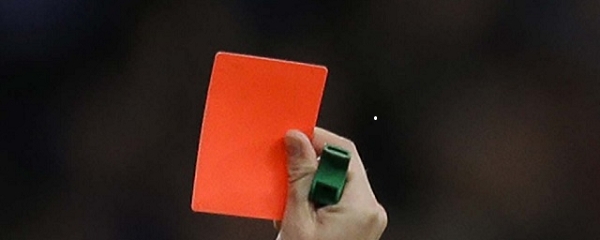
In football, a referee who favours one team sets a stadium alight and makes the evening news; VAR exists to correct him. Spanish justice has no VAR: when a judge tilts the pitch, the person reviewing it is usually another judge who may reply that "there is no right to a correct decision". And the match carries on regardless.
Slowness as an alibi
Public debate about justice almost always focuses on its slowness: delays, lack of resources, overloaded courts. These are real problems, but they also serve as a smokescreen. Talking about the pace of the match avoids talking about something far more serious: the referee's partiality and the impunity with which he can act.
A judicial error is human, and that is what appeals are for. What is unacceptable is something else: decisions which, according to those who suffer them, are explained not by error but by a wish to favour one party, and which nobody reviews because the reviewer belongs to the same profession. Imagine a referee who, besides whistling for one team, tripped up the players of the other.
The referee's foul play
How would you describe the following practices, all of them reported to our association by citizens who say they have suffered them in Spanish courts?
- Dismissing or rejecting a case on the strength of a prosecutor's report that is not served together with the decision.
- Concealing a prosecutor's report when its content does not suit the decision taken.
- Basing a decision on an anonymous prosecutor's report, or one without an entry stamp, whose authenticity is disputed.
- Handing a party a blank recording of the hearing and, while the court is asked to correct the error, declaring the time limit for appeal expired.
- Bypassing the case allocation rules to concentrate all related proceedings in a single court.
- When the allocation is inconvenient, rejecting or redirecting the case so that it ends up before the desired court.
If a referee did anything equivalent, such as hiding the rulebook, deleting the replay or hand-picking who officiates each match, nobody would hesitate to call it sporting corruption. Our association is in a position to provide documentary evidence of the cases it reports.
Equality of arms: a principle on paper only
The right to a fair trial with all guarantees, recognised in Article 24 of the Spanish Constitution and Article 6 of the European Convention on Human Rights, requires equality of arms: each party must be able to present its case under conditions that do not place it at a disadvantage against its opponent. The right to the ordinary judge predetermined by law also forbids hand-picking the judge. When allocation rules are manipulated or evidence disappears from the file, both guarantees are emptied of meaning.
The usual response when such conduct is reported to the higher courts is that "there is no right to a correct decision". It is true that nobody is entitled to have a judge rule in their favour. But everyone is entitled not to be cheated. Confusing the two is the most elegant way of avoiding an investigation.
The problem is not that the referee makes mistakes; it is that he can trip players up and nobody reviews the play.
A VAR for justice
Spain needs mechanisms to review not only whether decisions are correct, but whether the process is clean. We propose:
- Mandatory registration and traceability of every report and document added to proceedings, with immediate access for the parties.
- Regular public audits of compliance with case allocation rules.
- That complaints of judicial misconduct be examined by bodies with reinforced guarantees of impartiality, required to address every fact reported.
- That appeal deadlines do not start running until the party has the full recording of the hearing.
Trust in justice cannot be decreed: it is earned through clear rules and referees who respect them. If you have suffered any of these practices, document what happened and join those of us demanding fair play in the courts.