
For decades, South Africa institutionalised inequality through laws that set some citizens apart from others. Spain has no legal races, but it does have procedural castes: thousands of public office-holders, led by judges and prosecutors, enjoy a special jurisdiction denied to ordinary citizens. It is our silent apartheid, and its chief victim is public trust in equal justice.
Believing in yourself, the weapon of the weak
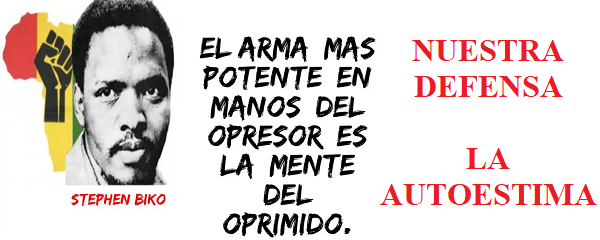
One of the great figures of the struggle against South African apartheid held that the most potent weapon in the hands of the oppressor is the mind of the oppressed. His lesson still holds everywhere: unjust systems are sustained not only by force, but by the resignation of those who endure them. When citizens stop believing in themselves and accept that nothing can change, abuse becomes the norm.
Spain has never known a regime of racial segregation, but it has built something that, allowing for every difference, shares its essential logic: laws that divide citizens into two categories before the courts.
Two categories of citizens
The aforamiento is a procedural privilege: certain office-holders are not investigated or tried by the judge who would be competent for any other citizen, but by a higher court, either the Supreme Court or a regional High Court of Justice. The Constitution provided for it for members of parliament and of the Government; the 1985 Organic Law of the Judiciary extended it to judges and prosecutors, and regional statutes and other laws kept lengthening the list.
The paradox is obvious: the privilege is concentrated in those who hold the most institutional power. They are precisely the people who decide whether money vanishing from the public purse is misappropriation or justified expenditure, and whether a criminal complaint deserves investigation or should be shelved.
The vicious circle of abuse
Controlling power while guaranteeing oneself immunity from its consequences forms a vicious circle. If a judge groundlessly dismisses a case alleging violations of rights, or shelves a complaint of misappropriation, who can stop it?
- The police act under the direction of the courts themselves and of the Public Prosecutor's Office.
- The Prosecutor's Office is hierarchical, and its head is appointed on the Government's proposal.
- The Government cannot, and must not, review court decisions.
- That leaves only other judges, career colleagues of the person under investigation, sitting in a higher court.
The answer, then, is disturbing: nobody outside the profession itself.
A duty forgotten for four decades
Lawmakers sought to prevent laws from being manipulated to serve a few. Article 35.1 of the 1979 Organic Law of the Constitutional Court provides that, where a judge or court considers that a statutory provision applicable to the case, on whose validity the ruling depends, may be contrary to the Constitution, it shall refer the question to the Constitutional Court.
According to 2022 figures, the Spanish judiciary numbered 5,320 judges. As far as we know, not one has referred to the Constitutional Court the privileges that benefit them, despite how poorly they sit with Article 14 of the Constitution, which proclaims the equality of all Spaniards before the law. That is forty years of silence.
A privilege that nobody dares to question ceases to be an exception and becomes a regime.
How to end the apartheid
The way out begins with concrete reforms:
- Abolish procedural privileges that do not meet a strict functional need, starting with those of judges and prosecutors.
- Ensure that complaints against members of the judiciary are handled with full transparency.
- Strengthen the independence of the Prosecutor's Office from the Government.
- Require courts to refer questions of constitutionality wherever the privilege clashes with Article 14.
But no reform will come if citizens accept that abuse is inevitable. Our best weapon is to keep our self-respect and to act together. If you share this conviction, join ACCYDED.