


ACCYDED - Citizens Association Against Corruption and for the Defense of the Rule of Law

Ten years of litigation to prove that one plus one equals two. Seven complaints shelved, more than forty proceedings lost and an institutional wall that will not give way. Our judicial journey is no personal anecdote: it portrays a system in which judges, prosecutors and public bodies seem to close ranks whenever someone reports one of their own.

A lawyer who exposed his government's corruption died in a prison in the Russian Arctic. His case shows how corrupt power clings to public money at the cost of the life and liberty of those who expose it. It would be naive to think persecuting dissent happens only elsewhere: in democracies like ours it takes quieter, yet effective, forms.

For decades, South Africa institutionalised inequality through laws that set some citizens apart from others. Spain has no legal races, but it does have procedural castes: thousands of public office-holders, led by judges and prosecutors, enjoy a special jurisdiction denied to ordinary citizens. It is our silent apartheid, and its chief victim is public trust in equal justice.

Spain needs a deep upgrade. Our representatives devote more energy to fighting each other than to sealing the cracks through which public money leaks away, and the institutions meant to curb corruption rarely succeed. Against this worn-out version of the country we propose another: Spain v2.0, a genuine rule-of-law State where the law binds everyone equally.

Every year, local councils and regional governments set aside large sums to promote sport, and much of that money reaches clubs and sports associations as subsidies and free use of facilities. Yet when a member asks to see the accounts, they often find that transparency stops at the changing-room door. That silence comes at a cost to everyone.

ACCYDED does not fight alone. For years, associations, foundations and international networks have exposed corruption and demanded independent justice. Their results have been modest, raising the question of why no public institution tackles the problem. This annotated directory brings together those who share our cause, because joining forces is the best answer to those who profit from troubled waters.

Thousands of owners in residential estates and business parks pay a monthly fee to an Urban Conservation Entity without really knowing what it is, who oversees it or how their money is spent. These bodies manage compulsory funds to maintain assets that belong to the municipality, and their opacity makes them fertile ground for abuses councils rarely wish to see.

The shell-game hustler does not win through quick hands, but because he never plays alone: accomplices cheer, place fake bets and shout down the victim the moment doubts arise. That old street scam has become a method of governance, played today in meetings, official offices and courtrooms, with stamped papers instead of peas. The citizen always loses.
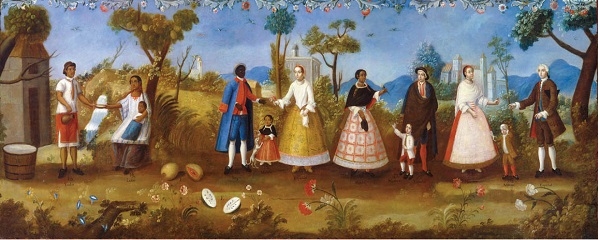
For centuries Spain ran caste societies in which a person's rights depended on their blood. The 1978 Constitution set out to bury that legacy by declaring, in Section 14, that everyone is equal before the law. Yet those who hold the most power have built a new estate: the aforados, first-class citizens with made-to-measure justice.